A Century of Connection: The Evolution of the Arlington Avenue Bridge
Nestled along the banks of the Truckee River lies the naturally lush island of Wingfield Park. Located in the heart of our city, this treasured riverside retreat has long served as a serene sanctuary from the bustling energy of downtown Reno. Shaded by cottonwood and willow trees and surrounded by grassy lawns and refreshing river pockets, Wingfield Park is far more than a public park—it’s a beloved community landmark where generations of families, friends, and visitors alike have come together to enjoy the scenic views of the Truckee River and beyond.
Today, the scenic island bustles with energy of kayakers, swimmers, and weekend picnickers while serving as the seasonal setting for community events, festivals, and summertime concerts that define Reno’s vibrant culture. Linked to downtown by the North and South bridges of Arlington Avenue, Wingfield Park seamlessly connects the urban pulse of downtown to the soothing natural rhythm of the Truckee River.
But long before it became one of Reno’s favorite gathering places, this stretch of the Truckee River was the beginning of a much larger story—one shaped by vision, change, and a community’s desire to reconnect with the heart of the city.
The story of the Arlington Avenue Bridge and Wingfield Park is a century-long narrative of transformation, community vision, and the enduring power of preserving the places that bring us together.
From Belle Island to Wingfield Park
Long before it bore its current name, the three-acre riverside haven was affectionately known as Belle Island. Beginning in 1911, the community landmark served as Reno’s ultimate playground. Far more than a simple patch of grass and weeping willows, Belle Island buzzed with the lively sounds of a booming amusement park, a bustling dance hall, a roller-skating rink, boat rental services, and even a grand 700-seat open-air theater that hosted everything from live plays to community gatherings beneath Reno’s summertime sunsets.
The true turning point came in 1920, when George Wingfield—a prominent Nevada banker and entrepreneur—recognized the island’s unique value to the community. He purchased the land as a gift to the City of Reno, investing it back into the city and forever altering the trajectory of the island, and the city that surrounded it.
In honor of Wingfield’s profound generosity, the property was officially renamed Wingfield Park, permanently transforming the private commercial resort into the public riverside retreat that residents continue to cherish today.
Lasting Connections to Wingfield Park & Beyond
With its new identity as a public gathering space came the need for a stronger, more permanent connection to the surrounding city. In 1921, the first permanent Arlington Avenue Bridge was constructed on the north side of the island, replacing the original timber walkway with a structure built to endure.
In 1938—more than a decade later—the connection was complete when a second bridge was constructed on the island’s south end, creating the iconic two-bridge span that would define Reno’s riverfront geography for the next century.
Together, these arches became far more than pathways used to cross the Truckee River. They became the welcoming gateways into the heart of the community—carrying residents, visitors, and over a hundred years’ worth of priceless collective memories.
Building Bridges to a Brighter Future
For over a century, the historic North and South Arlington Avenue bridges carried more than foot traffic; they were the threshold to afternoon picnics, refreshing river dips, and family walks through the trees—and after nearly one hundred years of bringing the community together, these historic crossings reached the end of their lifespan.
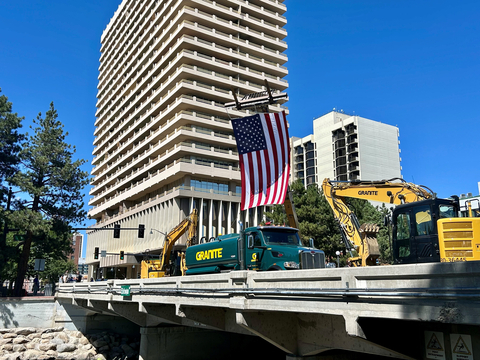
In May 2025, the City of Reno and the Regional Transportation Commission embarked on a $30-million reconstruction project. The goal wasn’t to replace the aging infrastructure, but to honor the deep sentimental value these crossings held for generations of Reno residents while investing in the city’s next chapter.
The result is a stunning blend of past, present, and future. Designed with Reno’s arts and lively culture in mind, the new bridges feature a community-selected Art Deco aesthetic that beautifully represents Reno’s vibrant evolution and the natural spirit of the Truckee riverfront. Completed with warm updated lighting that illuminates the evening skyline, lush new landscaping, and enhanced safety features designed to protect drivers, pedestrians, and bicyclists, the project has breathed new life into the downtown experience.
The reconstruction of the Arlington Avenue bridges serves as a profound testament to Reno’s community pride and ongoing beautification efforts. More than an investment in the future—it’s a promise to the next generation—to keep strengthening the emotional and physical bonds between our bustling downtown and the beloved, timeless beauty of the Truckee River and beyond.
In June 2026, the barriers came down, and the Arlington Avenue bridges and Wingfield Park officially re-opened to the public. The moment marked the completion of one of downtown Reno’s most significant and emotionally resonant infrastructure projects in recent history.
And while the structures themselves are brand new, the spirit running through them remains unchanged. For more than a century, these lanes have linked us to the river, to our history, and to each other. Today, they stand ready to carry us forward, bridging the Reno we’ve always loved with the brighter future we’re building together.


News, Reno, Reno Riverwalk, Riverwalk, Riverwalk District